Trade Website Checklist: What a Local Service Business Actually Needs
A practical checklist for plumbers, plasterers, roofers, electricians, locksmiths, decorators and other local service businesses.
Most trade websites do not need complicated technology. They need to answer the right questions quickly, show genuine work and make contacting the business easy on a phone. The strongest trade sites are often simple in structure but deep in proof.
Once those website essentials are in place, a local service business may benefit from ongoing work on search visibility. Our local SEO services explain the process; monthly SEO package pricing shows the starting scope for managed work.
Core pages
- Homepage that says what you do and where you work
- Separate useful pages for the services customers genuinely search for
- Project/case-study format for real work
- About/trust information
- Contact or quote page that asks useful questions
Show the evidence customers need
Use your own work photos, reviews, qualifications, insurance information where relevant and detailed project examples. “Quality service” is less persuasive than showing the actual finish and explaining what was done.
Match the website to the way your customers choose
A trade website should not simply swap one trade name for another. An urgent call-out and a planned refurbishment need different information and different first steps. The examples below are proposed structures, not claims of client results or automatic inclusions in every package.
Plasterers: show the starting surface and the finish
Distinguish skimming, repairs and rendering when you genuinely offer them. A useful project example pairs a whole-room view with a closer photograph of the finish, then explains the starting condition and work completed. For the first enquiry, ask for the town or postcode, the rooms or approximate area, the existing surface and the preferred timing. A website enquiry is not a substitute for a site assessment where one is needed.
Explore our plasterer website design and SEO package for a service structure built around this buying process.
Painters and decorators: separate the projects you want to win
Interior decorating, exterior painting and commercial work can involve different timescales, access and expectations. Show completed rooms and explain preparation, protection and the scope of the job. Describe wallpapering, spraying or specialist work only where it is part of your actual service. A short quote request can ask about the property, rooms or exterior areas, required work and timing; leave the final specification and quotation to the conversation.
See our painter and decorator website design for the relevant starting point.
Locksmiths: separate urgent calls from planned work
An urgent visitor needs your real phone number, genuine coverage and current opening arrangements without completing a long form. Planned lock replacement or door-repair enquiries need room for a short explanation. Keep emergency availability and response-time statements accurate; do not invent branches or credentials to look more established. Test the telephone link on a phone and ensure that the receiving number is actually monitored.
Our locksmith website design package explains the emergency and planned-work routes.
Removals companies: understand the move before quoting
Useful initial details include collection and destination areas, approximate move date, property size, floor levels and access. Ask about packing or storage only where those services are offered. Keep a distinction between a preliminary enquiry and a confirmed fixed quote. Detailed inventory tools and booking integrations need their own scope rather than being assumed to come with a standard contact form.
Review our removal company website design for a move-focused customer journey.
Tree surgeons: show the work and the access constraints
Separate the services you provide, such as pruning, removal, hedge work and stump grinding. Real project photographs can explain the site, access and completed work without exposing a customer’s private address. Your qualifications and insurance statements should be current and verifiable. A first enquiry can capture the area, requested work and obvious access restrictions; the assessment and permissions still need to be handled properly.
See our tree surgeon website design and the published CJB Tree Surgery project. The project illustrates relevant website experience, not a promised lead count for another firm.
Garages: connect the vehicle to the service
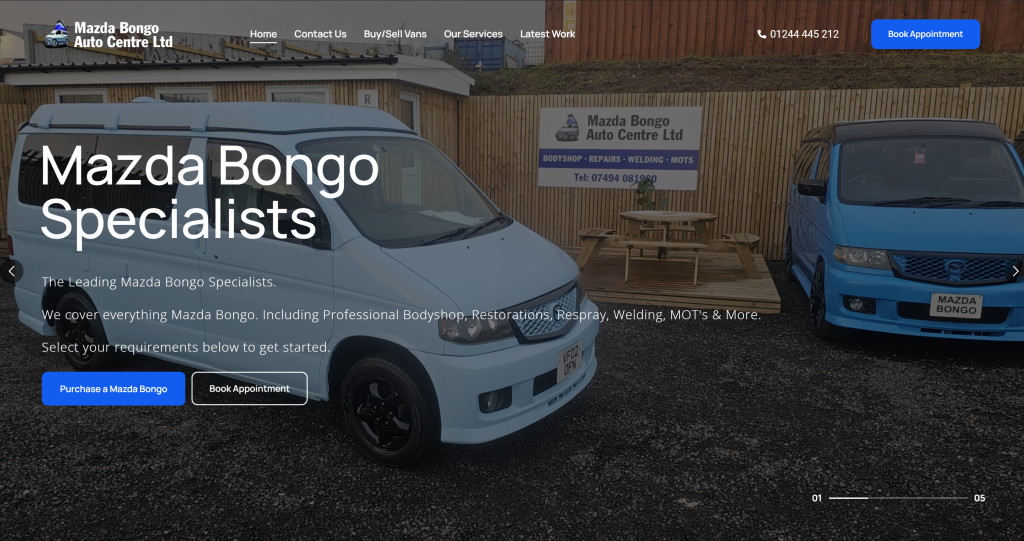
A workshop enquiry needs enough vehicle and job context to be useful. Organise real services and supported specialisms clearly instead of implying that every vehicle and repair is covered. Link a relevant completed job to the service it demonstrates. Explore automotive marketing services for the differences between a local workshop, performance specialist and parts retailer.
Make mobile contact easy
Phone, form and messaging actions should be easy to reach without covering the content. Urgent services may need a stronger click-to-call option; planned projects usually benefit from a better quote form that collects photographs, dimensions or property details.
Search foundations
One strong page for each genuine service is usually more useful than dozens of near-duplicate location pages. Internal links, Search Console, page titles and project content can then build around that structure.
Use projects as local proof
A project page can show the service, location, photographs, problem, solution and result. That is useful to customers and can also strengthen the relevant service page through natural internal links.
What should a trade quote form ask?
Only what helps the first conversation. For some trades that means photographs and postcode. For others it may mean property type, dimensions, urgency, destination or vehicle details. The form should qualify the enquiry without becoming homework.
Test the website as a customer before sending it traffic
- Use a phone: open a service page and check that the service, area and contact action are clear without a desktop screen.
- Follow a real job: start with a project photograph, find the relevant service and reach the enquiry route.
- Submit one labelled internal test: use an email address you control and confirm that the request is saved and reaches the person who responds. Do not count it as a customer lead.
- Check the reply: ensure the acknowledgement explains the next step without promising a booking that has not been agreed.
- Review the first real enquiries: note the requested work, area and suitability before deciding whether the page needs more traffic or clearer information.
For your pages to connect usefully, visitors need descriptive links rather than repeated “click here” labels. Google’s link guidance also explains how crawlable links and meaningful anchor text help Google find and understand pages. Link each genuine job example to the service it demonstrates.
What not to do
- Publish 100 near-identical town pages
- Use stock photos instead of real work where real work exists
- Hide the phone number on urgent-service sites
- Put every service on one generic page
- Make unrealistic ranking or lead guarantees